





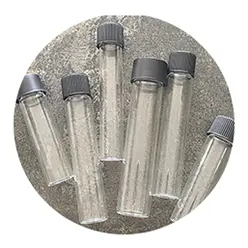


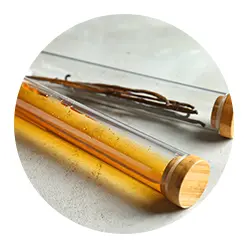
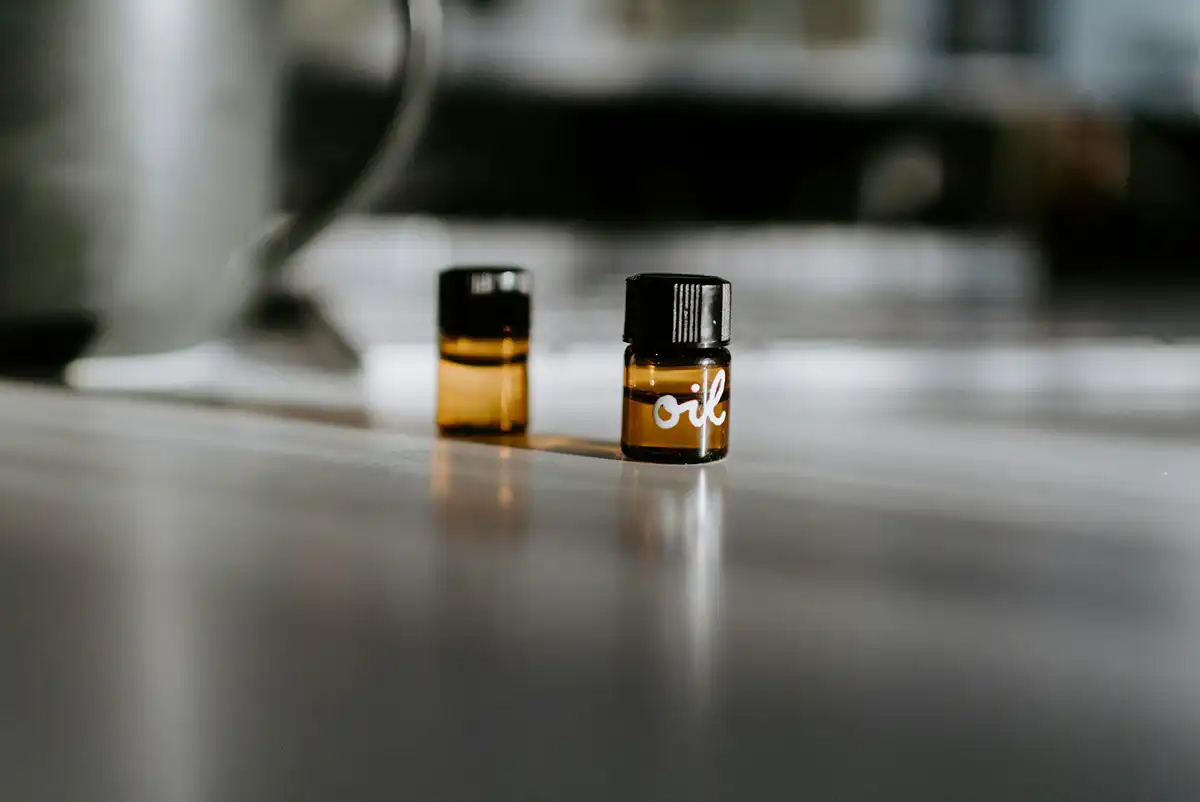
A successful custom glass bottle starts with clear requirements for size, finish, closure, production volume, decoration, and filling needs.
By Corey Knowles
Custom glass packaging gives manufacturers more control over how a product is contained, dispensed, presented, and handled during production. The best results come from defining the functional requirements first, then working with an experienced glass manufacturer to turn those requirements into a bottle that can be produced consistently and efficiently.
What Should You Define Before Going Custom?
Define what the bottle must do before deciding what it should look like. Capacity, product type, closure, filling method, dimensions, decoration, order quantity, and handling requirements all influence whether a custom glass bottle is practical.
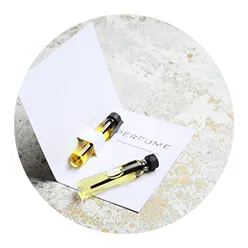
Start with the product itself. A cannabis pre-roll, essential oil, cosmetic formulation, fragrance sample, and dry product can require very different container dimensions and openings.
You should also identify any dimensional limits created by filling machinery, caps, cartons, labels, displays, or shipping materials. A bottle developed without considering the rest of the packaging system can create avoidable problems later.
What Bottle Size Fits Your Product?
The right bottle size provides the required capacity while fitting the way the product will be filled, closed, labeled, packed, and used. Capacity alone should not determine the dimensions.
With tubular glass manufacturing, diameter and length are important design variables. Acme Vial and Glass Co, Inc. works with stock glass tubing ranging from 7.75 mm to 29 mm in diameter and lengths from 19 mm to 203 mm, providing a useful starting range for many custom vial projects.
Existing product lines can also help establish a baseline. Acme manufactures stock Screw Thread Vials in multiple capacities, while custom manufacturing is available when a stock configuration does not meet the application.
A manufacturer should evaluate the complete package rather than simply increasing or decreasing bottle volume. Changes in diameter, length, opening, and closure can affect filling, handling, decoration, and final presentation.
Which Neck Finish Should You Choose?
Choose the neck finish according to the closure and dispensing method the product requires. The finish is a functional part of the package, so it should be decided early in the custom bottle design process.
Acme's tubular glass manufacturing capabilities include screw thread, shell or fire-polished, crimp, patent lip, and display finishes. Standard screw thread finishes include 8-425, 13-425, 15-425, 18-400, 20-400, 22-400, and 24-400.
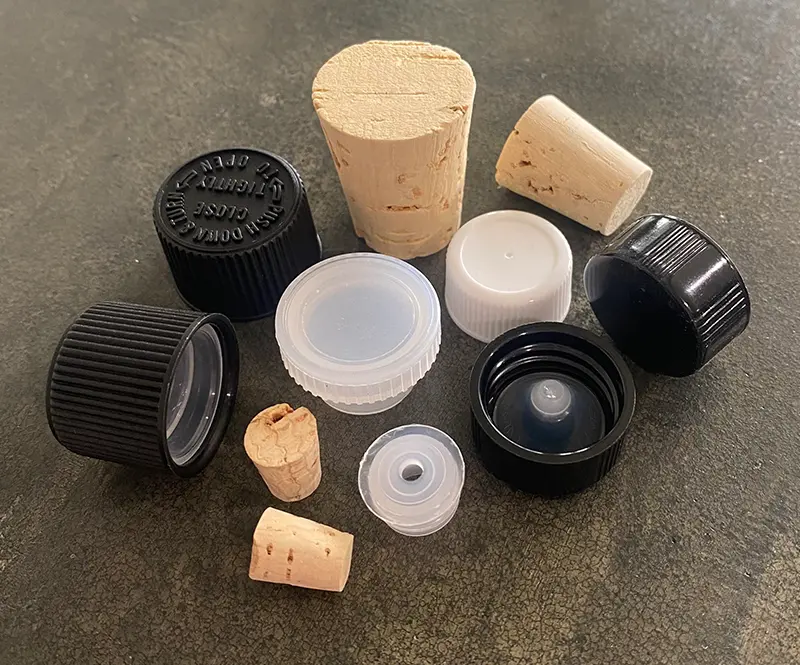
Closure requirements should be considered at the same time. Acme offers Closures including caps, corks, droppers, reducers, and stoppers, with specific sizes available for different vial configurations.
Treating the bottle and closure as one packaging system helps avoid a common design problem: developing the container first and trying to find a suitable closure afterward.
Stock Bottle or Fully Custom?
Start with a stock bottle when an existing size and finish already meet the important functional requirements. Go custom when the product, equipment, branding, or packaging system requires dimensions or features that the stock line does not provide.
A stock container can simplify the project because major dimensional decisions have already been made. It may be entirely appropriate when differentiation can come from the closure, labeling, decoration, or secondary packaging.
A fully custom glass bottles project makes more sense when the bottle itself needs to meet specific dimensional, capacity, finish, color, or branding requirements. Acme welcomes custom orders and can manufacture vials outside its stock product line in both small and large quantities.
The practical question is not whether custom is automatically better. It is whether customization solves a specific product or production requirement.
What Can Be Customized in Tubular Glass?
Tubular glass provides useful control over bottle length, diameter, opening style, glass selection, and other dimensional details within the capabilities of the manufacturing process.
Acme works with Type I amber and clear borosilicate glass tubing as well as soda-lime Type III glass. Its custom capabilities include shell, screw thread, crimp, patent lip, and display finishes.
During tubular vial manufacturing, glass tubing is heated and formed into the body. The neck and opening are then shaped, the bottom is formed, and the finished vial is annealed to relieve internal stresses before inspection and packaging.
That process matters when developing custom glass vials. A strong design starts with an understanding of what can be formed consistently from available tubing rather than treating glass as though any imagined shape can be produced without manufacturing constraints.
What Does a Manufacturer Need From You?
Give the manufacturer as much functional information as possible at the beginning of the project. At minimum, that should include the intended contents, desired capacity, approximate dimensions, preferred glass, opening or neck finish, closure requirements, decoration needs, and expected order quantity.
Existing samples, drawings, closure specifications, packaging dimensions, or filling-equipment requirements can also help define the project when they are available.
Be clear about which dimensions are essential and which are flexible. That gives the manufacturer room to recommend a workable bottle design based on actual manufacturing capabilities.
The more clearly the requirements are defined, the easier it is to determine whether an existing product can work, whether a modification is appropriate, or whether a fully custom solution is justified.
How Does Order Volume Affect Cost?
Order volume can materially affect unit cost because custom manufacturing pricing is tiered by quantity. At sufficiently high volumes, Acme notes that the cost of custom manufacturing can sometimes approach the cost of purchasing a stock part.
That does not mean every custom project costs the same or that volume is the only factor. Bottle dimensions, glass selection, finish, decoration, and other manufacturing requirements can also influence a project.
For buyers, the important step is to provide a realistic quantity estimate. A manufacturer cannot evaluate the commercial practicality of custom made bottles accurately without knowing the expected production volume.
If future demand may grow substantially, mention that as well. Designing around realistic production expectations can help prevent unnecessary changes later.
Which Designs Simplify Filling and Capping?
Designs that match your filling and closure processes are easier to integrate into production. Opening size, bottle diameter, overall height, closure style, and dimensional consistency should all be considered before the bottle design is finalized.
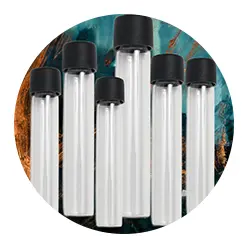
For example, Acme's stock display vials use a relatively large opening that can support automated filling of dry materials. That illustrates an important principle: the opening should fit the way the product enters the container, not simply the appearance of the finished package.
The same applies to closures. Screw caps, stoppers, corks, droppers, reducers, and other closure systems each impose different requirements on the neck or opening.
When discussing custom bottling and packaging with a manufacturer, explain how the container will move through your operation. Packaging that looks good but interferes with filling or capping is not a successful design.
Should You Add Silk Screen Printing?
Add silk screen printing when permanent decoration directly on the glass supports the brand or labeling requirements of the project.
Acme's Silk Screen Printing process uses a precision-cut screen to apply ceramic paint to glass. The decoration is then fused onto the glass in an oven to produce a permanent, stain-resistant, and wear-resistant finish.
Direct decoration can be particularly useful when the bottle itself is intended to carry a strong visual identity. It can also reduce reliance on a separate pressure-sensitive label for certain design elements.
Decoration should still be considered early. Available print area, bottle dimensions, artwork placement, and the rest of the package should be evaluated as part of the overall glass bottle design, rather than added as an afterthought.
What Custom Bottle Mistakes Should You Avoid?
The biggest mistake is designing around appearance before defining function. A bottle must work with the product, closure, filling process, decoration method, and surrounding packaging.
Another mistake is specifying dimensions independently of the manufacturing process. Tubular glass is formed from existing tubing, and practical designs need to account for available diameters, lengths, glass types, and finish capabilities.
Buyers should also avoid leaving the closure decision until late in the project. The neck finish and closure need to work together, so selecting them as a system is more effective than treating them as separate purchases.
Finally, do not begin a custom packaging glass project without a realistic estimate of production volume. Quantity affects pricing and is an important part of determining whether customization makes commercial sense.
How Do You Evaluate Manufacturing Quality?
Evaluate quality by looking at how the manufacturer controls the forming process, annealing, dimensional consistency, inspection, and finished-product handling.
In tubular vial production, heat must be controlled while the glass is formed. After forming, vials are annealed through controlled cooling to relieve internal stresses, then inspected for dimensional accuracy, consistency, and cosmetic defects before accepted product is packaged.
Acme Vial and Glass Co, Inc.'s quality policy centers on providing products that meet customer expectations and requirements through a quality management system focused on continual improvement and customer satisfaction.
For a custom project, manufacturing quality is directly connected to repeatability. A good concept has limited value unless the manufacturer can turn it into consistent production.
Why Choose an Experienced U.S. Manufacturer?
An experienced manufacturer brings practical knowledge of what can be produced consistently and how design decisions interact with manufacturing.
Acme Vial and Glass Co, Inc. has manufactured glass vials in the United States since 1942. The company remains family-owned and operated through three generations and manufactures tubular glass vials from its facility in Paso Robles, California.
That experience matters during a custom project because many decisions are connected. Diameter affects capacity. The opening affects the closure. The manufacturing process affects feasible dimensions. Decoration affects usable surface area. Production quantity affects cost.
Working with a manufacturer that understands those relationships can make the development of custom glass bottles more practical from the beginning.
Creating a Custom Glass Bottle That Works
Successful custom packaging starts with function. Define the product, capacity, dimensions, neck finish, closure, filling method, decoration requirements, and expected volume before committing to a design.
Acme Vial & Glass has been manufacturing glass vials in the United States for more than 80 years, with experience in stock and custom tubular glass products for customers across a wide range of industries. If your product line needs dimensions or features that standard packaging cannot provide, talk with Acme about creating custom glass bottles for your application.
About the Author
Corey Knowles is the General Manager of Acme Vial & Glass, a manufacturer with over 80 years of experience producing high-quality glass vials and closures for industries ranging from cosmetics to scientific research. She focuses on practical applications of glass packaging and how design choices impact performance in real-world use.