








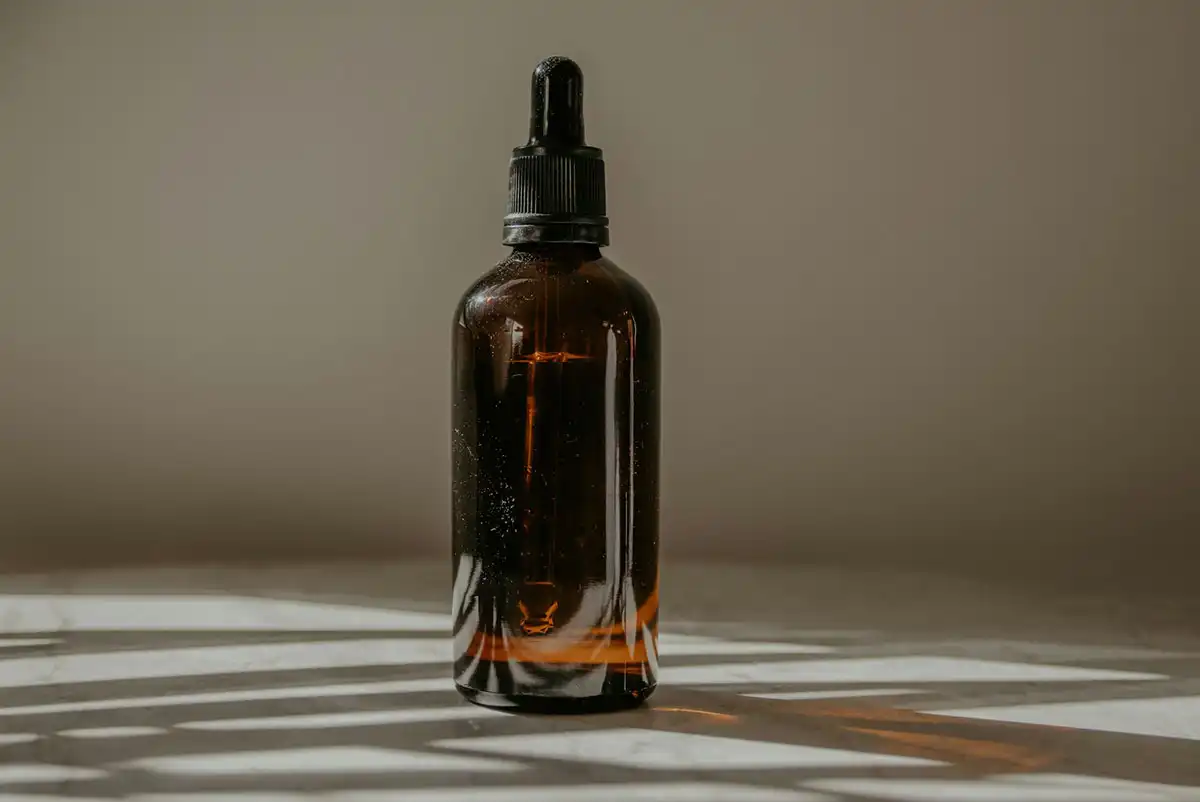
Use durable, correctly sized labels, apply them to clean glass, store filled bottles upright, and test packaging under real storage and shipping conditions.
By Corey Knowles
A well-made package can still create problems when its label peels, its lot code becomes unreadable, or the bottle leaks during storage. For manufacturers using glass dropper bottles, a consistent labeling and storage process helps protect product information, maintain an orderly inventory, and reduce avoidable damage during distribution.
What Should a Dropper Bottle Label Include?
A dropper bottle label should clearly identify the product, provide required directions and warnings, and include the information needed for inventory control and traceability. The exact content will depend on the product category and the regulations that apply to it.
Common label elements include:
- Product and brand name
- Net contents
- Ingredient or material information
- Directions for use
- Storage instructions
- Relevant warnings
- Manufacturer or distributor information
- Lot or batch number
- Expiration or best-by date, when applicable
Prioritize readability. Decorative elements should never make essential information difficult to find, especially on small containers with limited labeling space.
Manufacturers should also review the labeling requirements that apply to their specific industry and sales market before approving artwork. Cannabis, cosmetics, essential oils, and other packaged products may be subject to different rules.
How Should Label Size Match Bottle Size?
The label should fit within the bottle’s straight, usable wall area without extending onto the shoulder, base curve, or other uneven surfaces. A label that is too tall or wide is more likely to wrinkle, lift, or overlap.
Acme Vial & Glass offers dropper bottles in 4 ml, 8 ml, 10 ml, 15 ml, and 30 ml capacities. Because the available surface area changes with each container, manufacturers should measure the actual bottle rather than scaling one label design across every size.
When determining dropper bottle label size, account for:
- Bottle circumference
- Height of the straight sidewall
- Space between the shoulder and base
- Required gap between label edges
- Barcode and lot-code readability
- Automatic or manual application tolerances
Test printed samples on production bottles before ordering a full label run. A digital template can look correct on screen while fitting poorly on the actual glass.
Which Labels Resist Oils and Moisture?
Labels used around oily, wet, or alcohol-based products should use face materials, inks, coatings, and adhesives selected for those conditions. Standard paper labels may stain, soften, or lose adhesion when exposed to product residue or humidity.
A synthetic film label may be appropriate when bottles are likely to encounter oils, water, refrigeration, condensation, or frequent handling. Laminates and protective coatings can also help preserve printed information.
Material selection should be based on the complete package rather than appearance alone. Give your label supplier details about the formulation, bottle surface, filling process, storage temperature, expected shelf life, and shipping conditions.
Compatibility testing is especially important for essential oils, serums, tinctures, fragrances, and other liquids that may migrate across the bottle surface after filling.
How Should Glass Be Prepared for Labeling?
Glass should be clean, dry, and free from oil, dust, moisture, and handling residue before a label is applied. Even a small amount of contamination can weaken adhesive contact.
Keep unlabeled bottles in clean packaging until they are ready for production. Operators should avoid touching the intended label area unnecessarily, particularly after the glass has been cleaned.
When cleaning is required, use a process that does not leave lint or residue. Allow the bottle to dry completely before labeling.
The bottle and label should also be applied within the temperature range recommended by the adhesive supplier. Cold glass, high humidity, or rapid temperature changes can interfere with initial adhesion.
Should Bottles Be Labeled Before or After Filling?
The best timing depends on the filling line, formula, label material, and risk of surface contamination. Many manufacturers label before filling to work with a clean, dry bottle, while others label after filling to support inspection, coding, or production sequencing.
Labeling before filling can reduce the chance that product residue will interfere with adhesion. However, labels must then withstand filling-line contact, cleanup, capping, and handling.
Labeling after filling allows the manufacturer to inspect the filled package first. It also creates a greater need to keep the bottle exterior dry and free from drips.
Whichever sequence you choose, document it and test it under normal operating conditions. The process should consistently produce straight labels with secure edges and readable information.
How Can You Prevent Peeling and Wrinkling?
Peeling and wrinkling are best prevented by matching the label construction to the glass surface, applying it under controlled conditions, and giving the adhesive enough time to bond. Application pressure and alignment also matter.
Common causes of label failure include:
- Applying labels to damp or oily glass
- Using a label that extends onto a curved surface
- Selecting an adhesive without testing it against the product
- Labeling bottles that are too cold
- Trapping air beneath the label
- Handling bottles immediately after application
- Using inconsistent pressure during manual application
For hand labeling, a simple positioning guide can improve alignment from bottle to bottle. Automated lines should be adjusted for the exact bottle diameter and label dimensions.
After application, inspect the label seam and edges. Early lifting often indicates a fit, cleanliness, temperature, or adhesive problem that should be corrected before production continues.
Where Should Lot Codes and Expiration Dates Go?
Lot codes and expiration dates should be placed where they remain visible, readable, and associated with the correct product throughout its shelf life. Avoid locations that are routinely covered by secondary packaging or damaged by handling.
Codes may be printed directly on the primary label, applied to a designated blank area, or added to another stable part of the package. The method should produce sufficient contrast and resist smearing or rubbing.
Use a consistent format so warehouse staff, distributors, retailers, and customers can identify the information quickly. Where space is limited, reserve the coding area during label design rather than adding it after artwork has been finalized.
Manufacturers should verify code readability at normal viewing distance and under expected lighting. Scanners should also be tested when codes are used in automated inventory or traceability systems.
How Should Filled Dropper Bottles Be Stored?
Filled bottles should generally be stored in a clean, dry, temperature-controlled area away from direct sunlight and avoidable heat. Storage conditions should be based on the needs of the formulation, closure, label, and secondary packaging.
Keep cases off the floor and protected from water, dust, and impact. Use shelving, dividers, trays, or case inserts that prevent bottles from striking one another.
Inventory should be organized by product, size, lot, and date. A first-in, first-out or first-expiring, first-out system may help manufacturers manage stock consistently, depending on the product.
Environmental conditions should be monitored when temperature or humidity could affect the formula, label adhesive, printed information, or packaging materials. Avoid placing finished goods near heaters, exterior doors, unconditioned walls, or other areas with frequent temperature changes.
Should Dropper Bottles Be Stored Upright?
Filled dropper bottles should usually be stored upright unless the complete package has been validated for another orientation. Upright storage limits prolonged liquid contact with the closure and can reduce the risk of leakage or product reaching the label.
A dropper assembly typically includes a bulb, cap, and pipette. The closure must be correctly matched to the bottle and applied consistently to create a dependable package.
Even when bottles are stored upright, manufacturers should test for leakage during tipping, handling, and transportation. Packages rarely remain perfectly vertical throughout distribution.
Shipping cases should include orientation markings when they are useful, but markings should not replace secure packaging and package testing.
How Can Labels Be Protected During Shipping?
Labels can be protected during shipping by limiting bottle movement, preventing glass-to-glass contact, and keeping the package away from moisture and abrasion. Proper case packing is as important as the label material itself.
Use inserts, cells, dividers, trays, or other secondary packaging appropriate for the bottle size and shipment quantity. Bottles should fit securely without excessive pressure on droppers, bulbs, or caps.
Check whether adjacent bottles rub against printed areas during vibration. Repeated friction can scuff coatings, damage paper labels, or make codes harder to read.
Cases should also be packed to tolerate normal stacking and handling. Overpacked cartons may place pressure on closures, while underfilled cartons may allow bottles to shift and collide.
What Label and Storage Tests Are Needed?
Manufacturers should test the finished package under conditions that reflect filling, storage, handling, and distribution. Testing the label separately from the filled bottle may overlook problems that appear only after the components are combined.
A practical evaluation may include:
- Initial label adhesion
- Edge-lift inspection
- Resistance to oil, water, and formula residue
- Rub and scuff resistance
- Code legibility
- Barcode scanning
- Exposure to expected heat, cold, and humidity
- Upright and side-position leak checks
- Case stacking
- Vibration and shipping simulation
- Inspection after a defined storage period
Use the actual bottle, dropper, label, formula, and production method whenever possible. Substituting one component can change the results.
Record the test conditions and acceptance criteria. When a failure occurs, determine whether it came from the bottle surface, label dimensions, adhesive, ink, application process, closure, storage environment, or shipping configuration.
How Do Consistent Procedures Build Customer Trust?
Consistent labeling and storage procedures help customers receive packaging that looks organized, communicates clearly, and performs as expected. They also make it easier for production teams to identify and correct problems before finished goods leave the facility.
Create written procedures for bottle inspection, cleaning, label application, coding, closure application, storage, and final packing. Train employees to follow the same steps and document changes when materials or equipment are updated.
Supplier consistency matters as well. Acme Vial and Glass Co, Inc. has manufactured stock and custom glass vial products in the United States since 1942. From our Paso Robles, California facility, we focus on quality, consistency, and practical service for customers across many industries.
Protect the Package From Labeling Through Delivery
Proper labeling and storage begin with a compatible bottle, closure, label, and filling process. Clean glass, correctly sized labels, controlled application conditions, upright storage, and realistic package testing can help prevent peeling, unreadable codes, leakage, and shipping damage.
Manufacturers should confirm every packaging decision with actual production components rather than relying on appearance or specifications alone. A repeatable process gives teams clearer quality standards and gives customers greater confidence in the finished product.
For packaging support from an experienced U.S. manufacturer, review Acme Vial & Glass’s selection of glass dropper bottles for essential oils, cosmetics, skincare products, cannabis applications, and other liquid formulations.
About the Author
Corey Knowles is the General Manager of Acme Vial & Glass, a manufacturer with over 80 years of experience producing high-quality glass vials and closures for industries ranging from cosmetics to scientific research. She focuses on practical applications of glass packaging and how design choices impact performance in real-world use.