





Little glass vials are ideal for samples, crafts, displays, and small-format packaging when size, closure, and glass type match the product.
By Corey Knowles
Small packaging can make a big impression. For manufacturers in cannabis, essential oils, skincare, cosmetics, specialty foods, crafts, and display products, little glass vials offer a clean, practical, and attractive way to package small quantities without making the product feel like an afterthought.
What Are Little Glass Vials Used For?
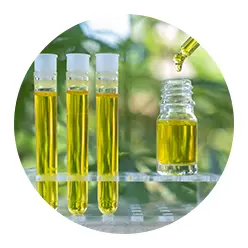
Little glass vials are used for samples, small products, craft components, display items, dry materials, oils, fragrances, and specialty packaging. They are especially useful when the product needs to be visible, neatly contained, easy to handle, and protected during storage or transport.
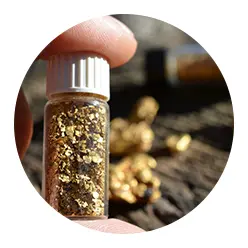
Manufacturers often use small sample vials for trial sizes, promotional kits, discovery sets, fragrance testers, mineral displays, pre-roll packaging, essential oil samples, cosmetic samples, and craft assortments.
A small vial can also help a brand introduce a product before a customer commits to a full-size package. That makes it a practical packaging choice for sales teams, retail displays, subscription boxes, trade shows, and direct-to-consumer sampling programs.
When Should You Use Small Glass Vials?
Small glass vials are a strong fit when your product is compact, valuable in small quantities, visually appealing, or intended for sampling. They work well when the package needs to feel clean, sturdy, and professional while keeping the product size manageable.
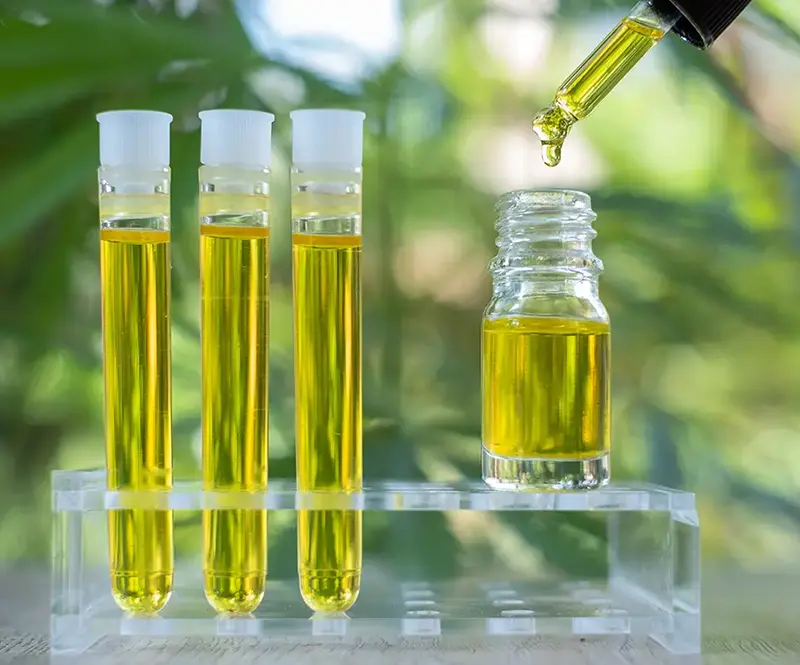
Glass is especially appealing for products where appearance matters. A clear vial can show color, texture, fill level, or product detail, while colored glass can create a more distinctive shelf presence.
Small vials are also useful when you want packaging that feels more intentional than a plastic bag or disposable sample cup. For many premium products, the container becomes part of the customer’s first impression.
Which Vial Style Fits Your Product?
The right vial style depends on what you are packaging, how it will be filled, and how the customer will open or use it. Screw thread vials, shell vials, patent lip vials, display vials, perfume sampler vials, and crimp bottles each serve different needs.
Screw Thread Vials are often chosen when a threaded closure is needed for secure storage and repeated opening. They are available in clear borosilicate as well as amber and blue glass options, with capacities ranging from ¼ dram to 11 drams.
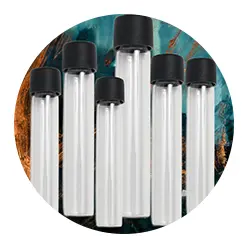
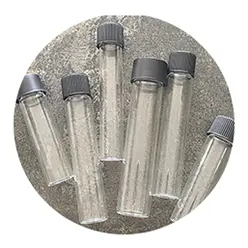
Shell vials are a versatile choice for dry materials and display-oriented packaging. They feature straight-sided walls that provide useful labeling space and can pair with tapered corks, with polyethylene stoppers available for some sizes.
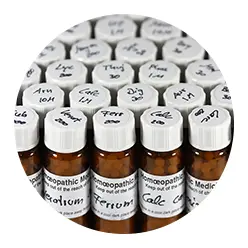
Patent lip vials are classic, old-style medicine vials commonly used for homeopathic products, dry materials, and oils. Perfume sampler vials are designed for small fragrance and beauty samples, while display vials work well for dry materials that benefit from a larger opening.
What Vial Size Do Samples Need?
Sample vial size should match the amount needed for a meaningful trial without overfilling, underfilling, or wasting product. For manufacturers, the best size often depends on serving size, product value, filling method, label needs, and how the sample will be distributed.
For very small fragrance or beauty samples, perfume sampler vials are available in 1/6 dram, 5/16 dram, and 3/8 dram sizes. For broader sample and product packaging needs, screw thread vials are available in sizes from ¼ dram to 11 drams, including 1 ml and 40 ml options.
If your sample needs branding, directions, batch information, or product identification, make sure the vial has enough usable surface area for labeling or decoration. A vial that technically holds the product may still be too small for a polished customer experience.
Which Closure Works Best?
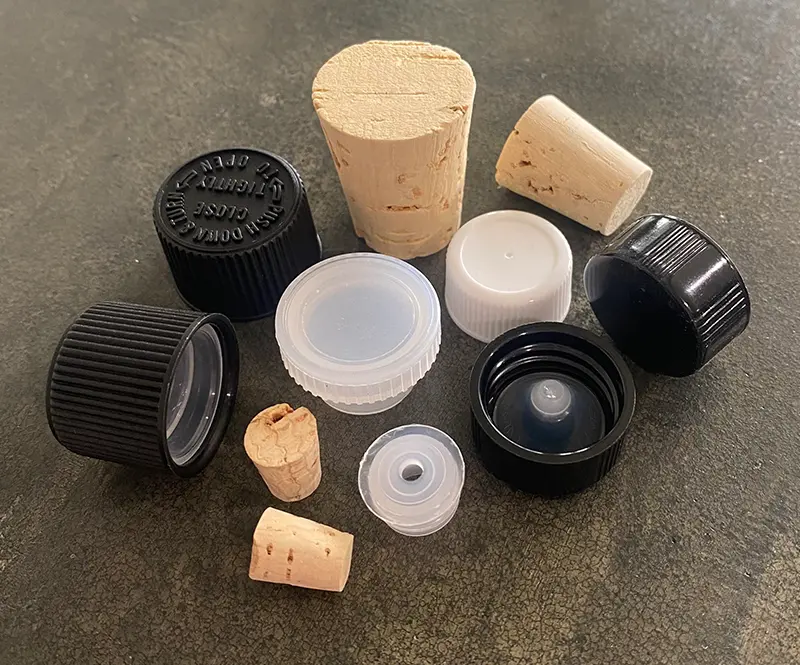
The best closure is the one that matches the vial style, product type, handling conditions, and customer use. Caps, corks, stoppers, reducers, droppers, applicator caps, and child-resistant caps all solve different packaging problems.
For threaded vials, phenolic caps and polypropylene caps are common choices. For shell, patent lip, and select display vials, corks and stoppers may be a better fit, depending on the product and closure compatibility.
Closures matter because they influence how the package seals, ships, opens, and feels in the customer’s hand. When selecting vials and caps, it is smart to evaluate the vial and closure together rather than treating the cap as an afterthought.
Clear, Amber, or Blue Glass?
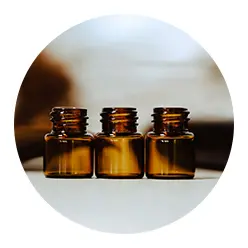
Clear glass is best when product visibility is a priority, while amber and blue glass are often chosen for light-sensitive products or a more distinctive brand presentation. The right choice depends on what the product needs to protect and what the customer needs to see.
Clear Vials are useful for samples, displays, cosmetics, crafts, and dry goods where color, texture, or fill level should be visible. This can be especially important for products with visual appeal, such as botanicals, beads, minerals, fragrances, and specialty ingredients.
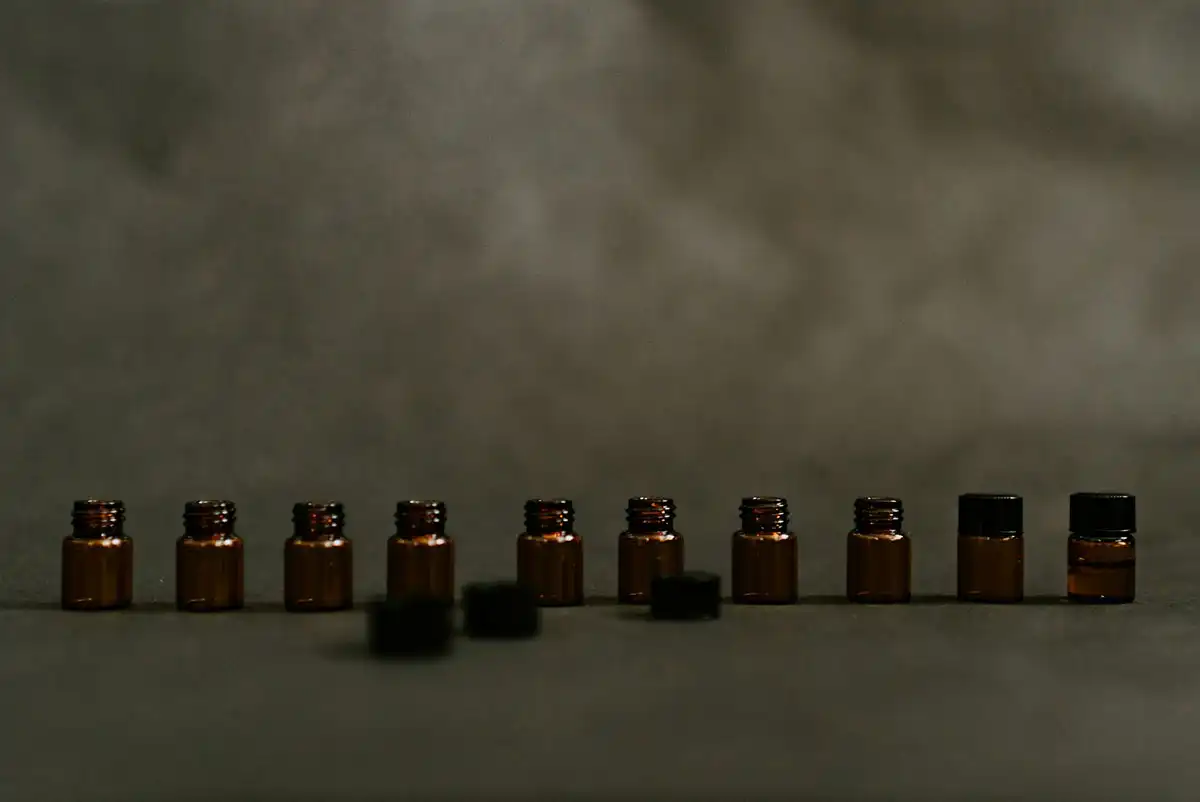
Amber and cobalt blue vials can support products where light exposure is a concern or where the brand wants a more refined look. The glass color should be chosen with the product, storage environment, label design, and customer expectations in mind.
How Can Vials Improve Product Display?
Glass vials can improve product display by making small items look organized, intentional, and easy to evaluate. They create a polished presentation for products that might otherwise be difficult to package attractively.
For craft, mineral, seed, bead, fragrance, and botanical products, visibility can be part of the selling experience. A clean glass container lets the customer see the product while keeping it contained and easier to handle.
Display Vials are designed for dry materials and feature a large opening that can support easier filling. For brands selling small-format products, the right vial can make a sample, insert, or display piece feel retail-ready.
Are Mini Vials Right for Your Industry?
Mini vials are right for many industries when the product is sold, tested, sampled, stored, or displayed in small quantities. Cannabis, essential oil, skincare, cosmetic, fragrance, craft, homeopathy, lab, and specialty product manufacturers can all benefit from small glass packaging when it fits the use case.
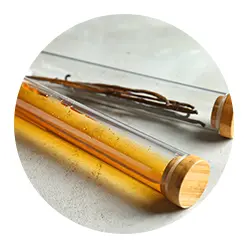
For cannabis manufacturers, glass vials and tubes can support pre-rolls, oils, and small-format packaging needs. For skincare and cosmetics, they can support trial sizes, ingredient samples, fragrance testers, and promotional kits.
For craft and display products, mini glass vials can turn small components into neat, sellable units. The key is matching the container to the product’s shape, handling needs, closure style, and customer experience.
What Mistakes Cause Leaks or Breakage?
Leaks and breakage often happen when the vial, closure, product, and handling environment are not selected as a complete system. Common mistakes include choosing the wrong closure style, ignoring thread finish, overfilling, using a vial that is too small for practical handling, or selecting packaging without considering shipping conditions.
A closure should fit the vial finish properly. A screw thread vial needs a compatible screw-thread closure, while shell and patent lip vials may require corks or stoppers depending on the size and application.
Breakage risk can also increase when packaging is packed loosely, filled carelessly, or shipped without enough protection. Good packaging selection includes the glass container, the closure, the fill process, and the outer packaging.
How Are Small Vials Made Consistently?
Small glass vials are made consistently through controlled tubing conversion, forming, annealing, inspection, and packaging. At Acme Vial and Glass Co, Inc., glass tubing is formed into vials using heat, rotation, air pressure, and tooling to create the body, neck, opening, and bottom.
The process starts with glass tubing, including borosilicate or soda-lime options. The tubing is heated, shaped, formed to the correct finish, sealed at the bottom, and then annealed to help relieve internal stresses.
Inspection is also important. Finished vials are checked for cosmetic defects, dimensional accuracy, and consistency before accepted vials are packed to reduce contamination and breakage during shipping.
When Is Custom Vial Manufacturing Worth It?
Custom vial manufacturing is worth considering when a stock vial does not match your product dimensions, brand presentation, closure needs, or production requirements. A custom vial can help solve fit, function, and presentation challenges that standard packaging cannot address.
Acme Vial & Glass welcomes custom orders and can help design vials to customer specifications in small or large quantities. Custom capabilities include shell, screw thread, crimp, patent lip, and display finishes.
Custom work may be especially useful for brands with unusual product shapes, specialized samples, unique display goals, or a need for packaging that feels more closely tied to the finished product. When volume increases, custom manufacturing can become a practical option to evaluate alongside stock packaging.
How Do You Choose a Trusted Vial Supplier?
Choose a vial supplier with real manufacturing experience, clear product knowledge, stock and custom capabilities, and a quality-focused approach. Supplier reliability matters because small packaging still needs to perform consistently across ordering, filling, storage, display, and customer use.
Acme Vial and Glass Co, Inc. has manufactured glass vials in the United States since 1942. Three generations later, Acme remains family-owned and operated from Paso Robles, California, serving customers across industries including aromatherapy, cosmetics, perfume, pre-roll tubes, essential oils, homeopathy, labs and research, minerals, universities, and more.
A good supplier should help you think through vial style, size, glass type, closure compatibility, and intended use. That practical support can prevent costly mistakes before they show up in production or in a customer’s hands.
Little Glass Vials Make Small Packaging Feel Purposeful
Little glass vials are an excellent choice when a product needs compact, attractive, and practical packaging for samples, crafts, displays, or specialty use. The best results come from choosing the right vial style, size, closure, glass color, and supplier before production begins.
At Acme Vial & Glass, we are proud to help manufacturers find stock and custom vial solutions that fit real products and real-world packaging needs. To explore options for samples, displays, crafts, and small-format packaging, visit our little glass vial page.
About the Author
Corey Knowles is the General Manager of Acme Vial & Glass, co, a manufacturer with over 80 years of experience producing high-quality glass vials and closures for industries ranging from cosmetics to scientific research. She focuses on practical applications of glass packaging and how design choices impact performance in real-world use.