



Better essential oil packaging protects aroma, supports clean dispensing, and helps your brand feel trustworthy.
By Corey Knowles
Essential oils are small-volume products with big expectations. The right glass packaging has to protect the oil, fit your filling process, look right on the shelf, and give customers confidence every time they open it.
What Must Essential Oil Packaging Protect?
Essential oil packaging must help protect the product from light, contamination, evaporation, spills, and poor handling. Because essential oils are often sold in small volumes, even minor packaging issues can affect customer perception and product value.
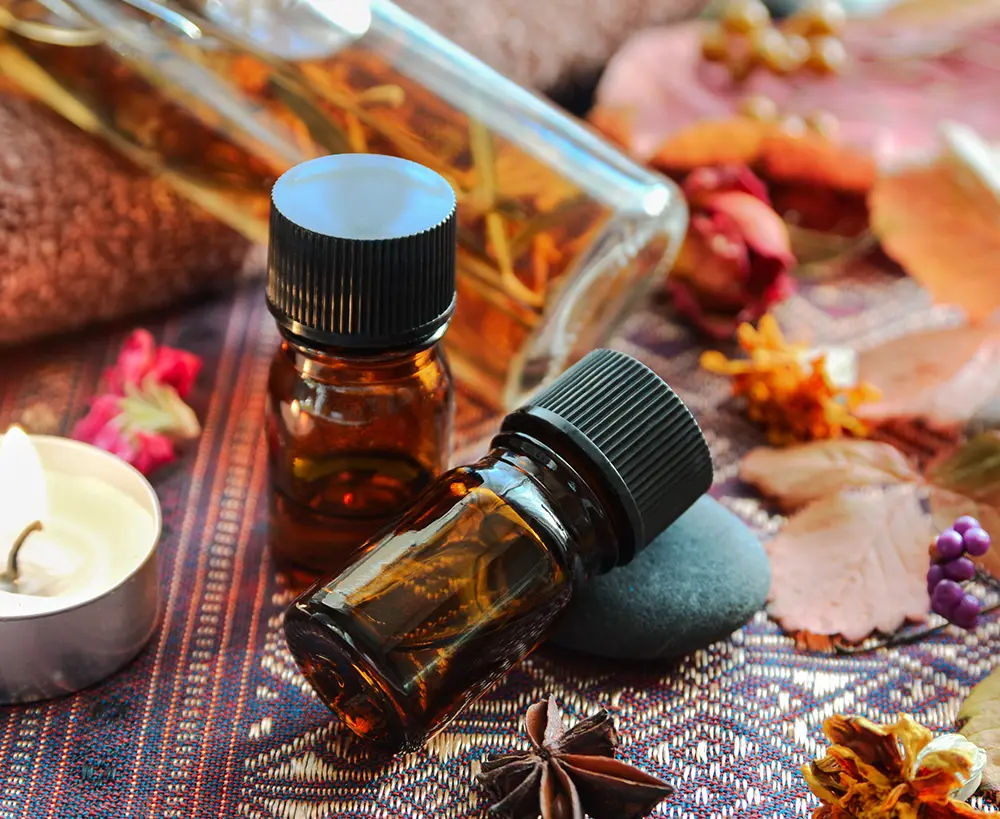
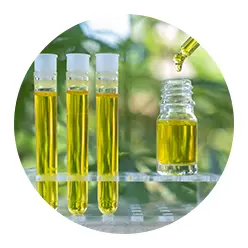
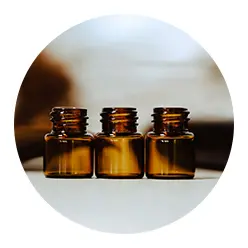
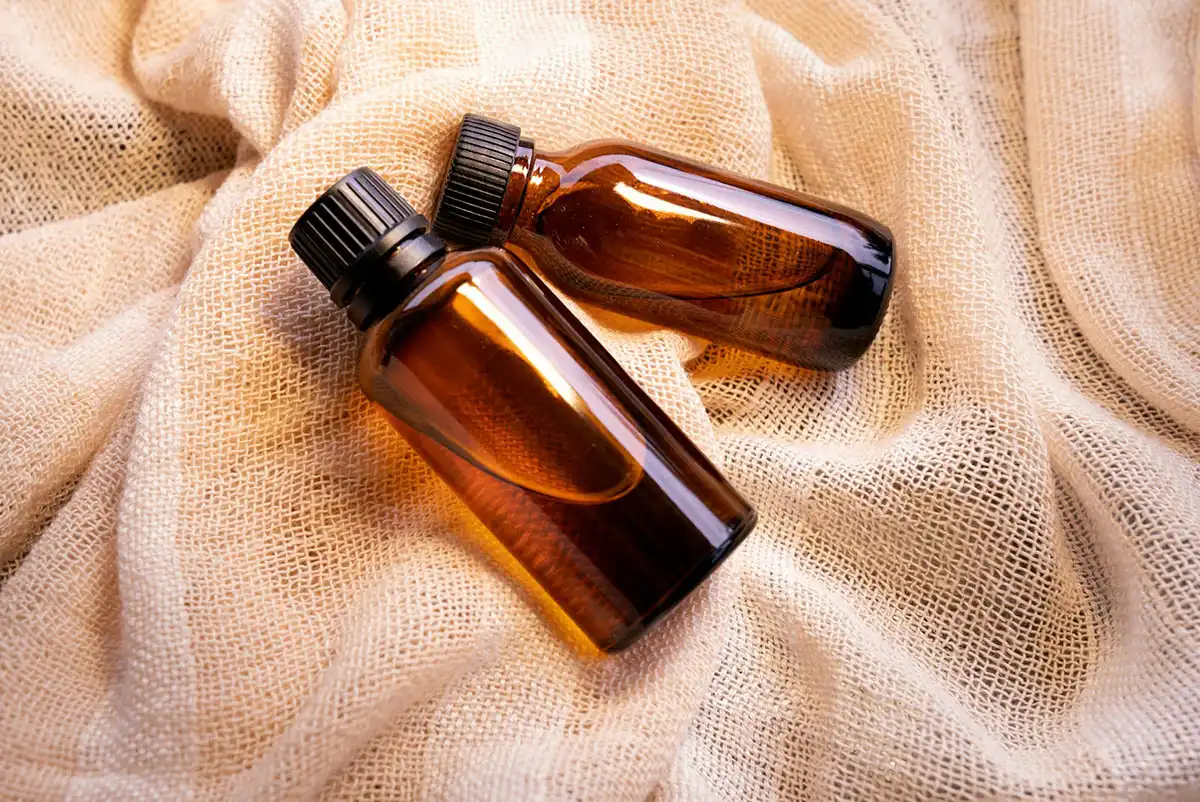
Glass is a strong choice because it offers a clean, durable, premium-feeling container for oils, fragrances, and other liquid products. For light-sensitive products, amber or cobalt blue glass can help reduce light exposure while still giving the package a polished appearance.
Packaging also needs to protect the customer experience. A vial or bottle that feels secure, dispenses cleanly, and stores well gives buyers more confidence in the oil inside.
Vials, Bottles, or Samples: Which Fits Best?
Choose the package format based on how the oil will be sold, used, and dispensed. Full-size retail products, sample programs, aromatherapy kits, and specialty blends may each need a different glass container.
For manufacturers, essential oil packaging often starts with a simple decision: is the goal controlled dispensing, easy sampling, attractive presentation, or compact storage?
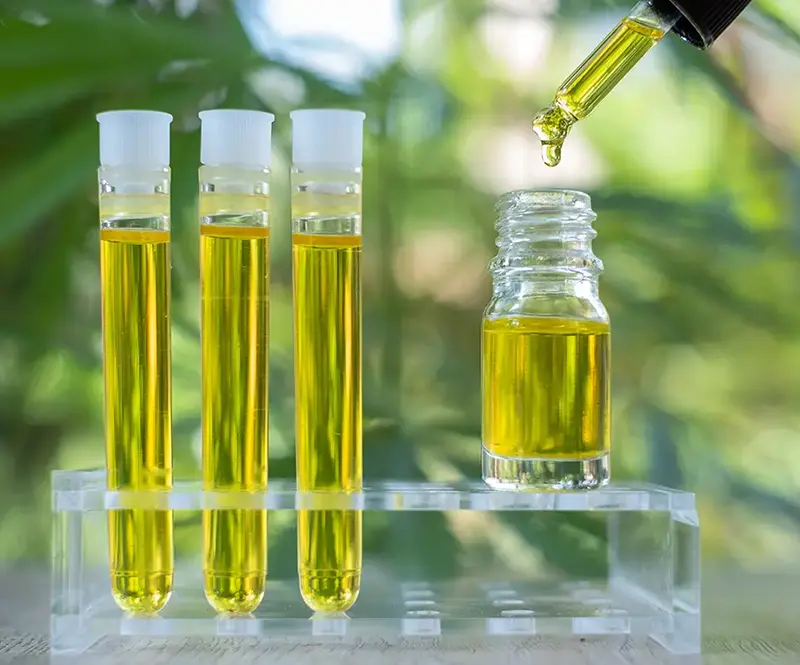
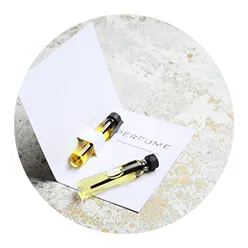
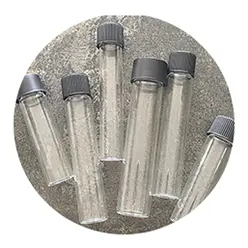
Glass dropper bottles are well suited for products that need measured dispensing. Screw thread vials, shell vials, patent lip vials, and perfume sampler vials can also make sense depending on the oil, closure, fill volume, and customer use case.
How Should Packaging Match Product Use?
Packaging should match the way the customer will actually use the oil. A product meant for direct application may need a different closure than an oil intended for blending, sampling, or controlled dispensing.
For example, applicator caps can support small, precise application for oils, fragrances, and topical liquids. Orifice reducers can help control flow for pourable products, reducing spills and waste when a dropper is not the best fit.
For sampling and trial sizes, small vials for essential oils can help manufacturers introduce scents, blends, and product lines without requiring a full-size purchase. That makes packaging part of both product protection and customer acquisition.
What Helps Prevent Leaks and Aroma Loss?
The best way to reduce leaks and aroma loss is to match the vial finish, closure, and fill process carefully. A good seal depends on the whole package working together, not the glass container alone.
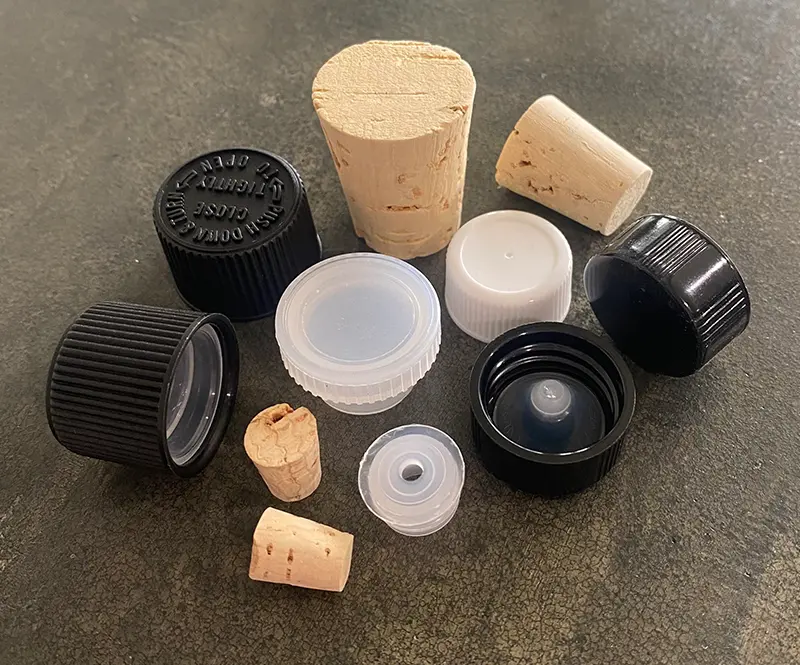
Screw thread vials feature a continuous thread finish designed to pair with screw-thread closures. Closures such as phenolic caps, polypropylene caps, droppers, stoppers, corks, and orifice reducers all serve different functions, so the right choice depends on the oil, dispensing method, and storage conditions.
For essential oils, manufacturers should also think about how products are packed, shipped, and stored after filling. Cool, dry storage and proper closure application can help preserve the product experience from production through final use.
When Do Small Glass Vials Make Sense?
Small glass vials make sense when the product is concentrated, high-value, sold as a sample, or used in small amounts. Essential oils often fit that profile because customers may only need a few drops at a time.
Acme Vial & Glass offers several small-format options across product categories, including screw thread vials, perfume sampler vials, shell vials, patent lip vials, and dropper bottles. Available options include very small sample sizes as well as larger formats for retail and storage.
For brands building discovery sets or trial programs, small oil vials can make the product easier to sample, ship, and display. They also give customers a practical way to test scent, strength, and application before buying a larger size.
How Can Packaging Support Easy Filling?
Packaging supports easy filling when the opening, vial shape, closure style, and packaging format fit the production process. A container that looks attractive but slows down filling can create avoidable frustration.
Display vials, for example, offer a larger opening that can support efficient filling for dry materials, while screw thread vials and dropper bottles may be better suited to liquid packaging where closure control matters. The best choice depends on the oil viscosity, fill method, desired dispensing style, and final presentation.
Manufacturers should decide key specifications before ordering, including capacity, glass color, neck finish, closure type, and whether the product needs stock or custom packaging. Getting those details aligned early helps reduce mismatches during production.
Are Glass Vials Right for Essential Oils?
Glass vials are often a strong fit for essential oils because they offer a clean look, durable feel, and practical protection for small-volume products. They also support a premium brand impression, especially when paired with the right closure and decoration.
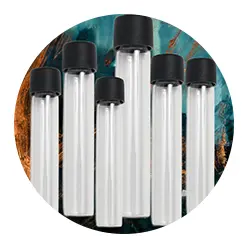
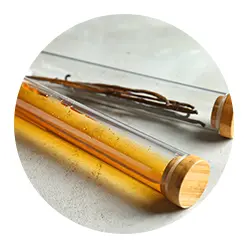
Acme manufactures tubular glass vials using borosilicate and soda-lime glass tubing, with options that include amber and clear Type I borosilicate and soda-lime Type III glass. Stock tubing ranges from 7.75mm to 29mm in diameter and 19mm to 203mm in length, which gives manufacturers flexibility across many vial styles.
For brands that need essential oil glassware, glass can support both function and presentation. The key is choosing a format that fits the oil, the closure, the application method, and the customer’s expectations.
What Makes Essential Oil Packaging Feel Premium?
Premium packaging feels intentional, consistent, and easy to use. Customers notice glass clarity, color, closure fit, label space, decoration, and how confidently the package opens and closes.
Amber glass can communicate protection and tradition. Clear glass can highlight the product’s color and clarity. Cobalt blue can add a distinctive shelf presence for brands that want a more stylized look.
Customization can also elevate the package. Silk screen printing, custom dimensions, color choices, and specialized finishes can help a product line feel more cohesive while keeping the container practical.
What Packaging Mistakes Hurt Product Quality?
Common packaging mistakes include choosing the wrong closure, overlooking light exposure, using a package that is difficult to fill, and selecting a container before confirming how the oil will be dispensed. These issues can lead to leaks, waste, inconsistent use, or poor shelf appeal.
Another mistake is treating packaging as a visual decision only. The container has to work during filling, shipping, storage, display, and customer use.
Manufacturers should also avoid assuming that one package works for every oil. A sample vial, retail bottle, refill container, and premium gift-set component may each call for a different specification.
When Is Custom Glass Packaging Worth It?
Custom glass packaging is worth considering when stock packaging does not match your product, brand, closure needs, or fill process. It can also make sense when packaging is central to how the customer understands the product.
Acme Vial and Glass Co, Inc. welcomes custom orders and can help design vials to customer specifications for small or large quantities. Custom capabilities include shell, screw thread, crimp, patent lip, and display finishes.
For manufacturers building a distinctive product line, custom essential oil bottles can support both function and brand recognition. The most useful custom packaging starts with clear requirements for size, shape, finish, glass type, decoration, and closure style.
What Should You Ask a Packaging Supplier?
Ask whether the supplier understands your product use, filling process, closure requirements, storage needs, and volume goals. A good packaging conversation should move beyond appearance and into practical performance.
Helpful questions include: What glass options are available? Which closures fit the selected vial? Can the supplier support stock and custom needs? What finish options are available? How is product consistency managed?
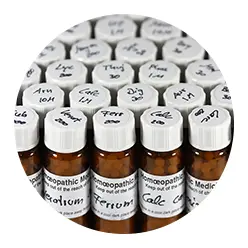
It also helps to ask about experience. Acme Vial and Glass Co, Inc. has manufactured glass vials in the United States since 1942, remains family-owned and operated, and works with customers across industries including aromatherapy, essential oils, cosmetics, perfume, labs, research, homeopathy, and more.
How Do Quality Practices Build Trust?
Quality practices build trust by making packaging more consistent, reliable, and suitable for real production use. For essential oil manufacturers, consistency matters because packaging affects filling, sealing, labeling, shipping, and customer satisfaction.
Acme’s tubular vial manufacturing process includes glass tubing preparation, heating, body forming, neck and opening formation, bottom formation, annealing, inspection, and packaging. Annealing helps relieve internal stresses in the glass, while inspection supports dimensional accuracy, cosmetic quality, and consistency.
Acme Vial & Glass is committed to providing quality products on time that meet or exceed customer expectations and comply with applicable requirements. That kind of practical, process-driven approach matters when your packaging has to protect both the oil and the brand behind it.
Choosing Essential Oil Packaging with Confidence
The best essential oil packaging starts with the product and works outward. Consider how the oil needs to be protected, how it will be filled, how customers will dispense it, and what the finished package should communicate about your brand.
Acme Vial & Glass brings more than 80 years of U.S. glass vial manufacturing experience to stock and custom packaging conversations. To explore glass vial options for oils, samples, and specialty product lines, visit Acme’s essential oil packaging page. Contact Acme Vial today about stock and custom packaging solutions for oils, samples, and specialty products.
About the Author
Corey Knowles is the General Manager of Acme Vial & Glass, co, a manufacturer with over 80 years of experience producing high-quality glass vials and closures for industries ranging from cosmetics to scientific research. She focuses on practical applications of glass packaging and how design choices impact performance in real-world use.