

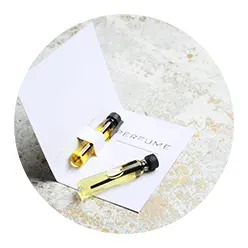
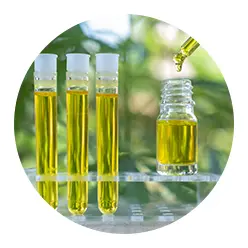

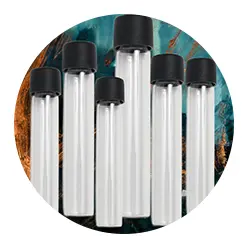
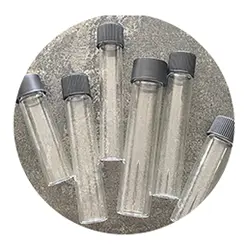


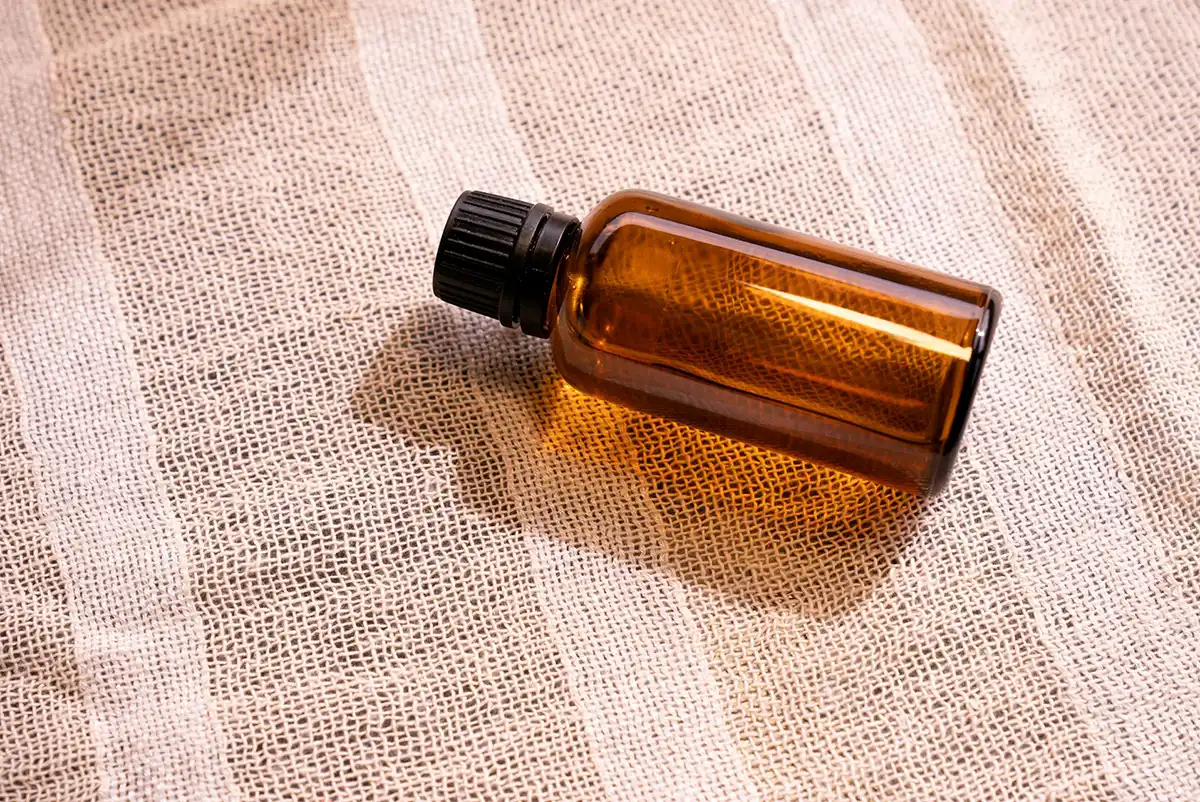
Custom glass bottles can improve filling, dispensing, branding, consistency, and packaging efficiency when stock bottles no longer fit your operation.
By Corey Knowles
For essential oil manufacturers, packaging has to do several jobs well. A bottle must fit the product, work efficiently on the filling line, support reliable dispensing, and present the brand consistently. Stock packaging is often the right place to start, but as a product line grows, custom glass can provide practical advantages that standard sizes and configurations cannot.
What Are Custom Essential Oil Bottles?
Custom essential oil bottles are glass containers manufactured around requirements selected for a particular product or packaging operation rather than simply chosen from an existing stock line.
Depending on the project, customization can involve capacity, dimensions, glass type, color, neck finish, or decoration. Acme Vial & Glass manufactures both stock and custom glass vial products, giving manufacturers flexibility to start with an existing solution or develop packaging around more specific requirements.
Custom manufacturing is most valuable when it solves a defined packaging problem. A custom bottle should make filling, dispensing, presentation, or product-line management easier rather than adding complexity for its own sake.
When Should You Move Beyond Stock Bottles?
Move beyond stock packaging when the limitations of an available bottle begin affecting production, product presentation, or the way customers use the package.
Stock screw thread vials are available in numerous capacities and can be a straightforward solution for many oils. Other stock formats, including dropper bottles and several closure styles, may also meet the needs of a new or established product without requiring custom tooling or dimensions.
Custom manufacturing becomes more practical when a manufacturer repeatedly works around an imperfect bottle. A poor fit with filling equipment, excessive unused volume, inconvenient dimensions, limited decoration space, or an inconsistent family of packages can all justify evaluating a custom design.
How Can Custom Sizes Improve Filling?
Custom dimensions can improve filling when the bottle is designed around the volume being packaged and the physical requirements of the production process.
Bottle diameter, height, opening, and overall capacity can affect how easily a container moves through filling and packaging operations. Acme manufactures tubular glass from stock tubing ranging from 7.75 mm to 29 mm in diameter and can produce custom vials in small or large quantities when a stock product does not meet the requirement.
The goal is not simply to create an unusual size. A useful custom specification should address a measurable operational need, such as achieving a better container footprint, reducing unnecessary headspace, or matching equipment and handling requirements more effectively.
How Does Bottle Shape Affect Use?
Bottle geometry can influence filling, handling, labeling, storage, and dispensing, so dimensions should be selected with the entire packaging process in mind.
Tubular glass manufacturing is especially well suited to cylindrical containers. During production, glass tubing is heated and formed to establish the vial body, length, neck, opening, and bottom before annealing and inspection.
Straight-sided containers can also provide useful surface area for labels or decoration. When evaluating a new design, manufacturers should consider how the bottle will be filled, capped, packed, displayed, transported, and ultimately handled by the customer.
Which Custom Features Matter Most?
The most important custom features are the ones that directly affect packaging performance or brand presentation.
For essential oil manufacturers, those features commonly include capacity, bottle dimensions, glass type, color, neck finish, closure approach, dispensing method, and decoration. Acme's custom tubular glass capabilities include shell, screw thread, crimp, patent lip, and display finishes, along with clear and amber Type I borosilicate and soda-lime glass options.
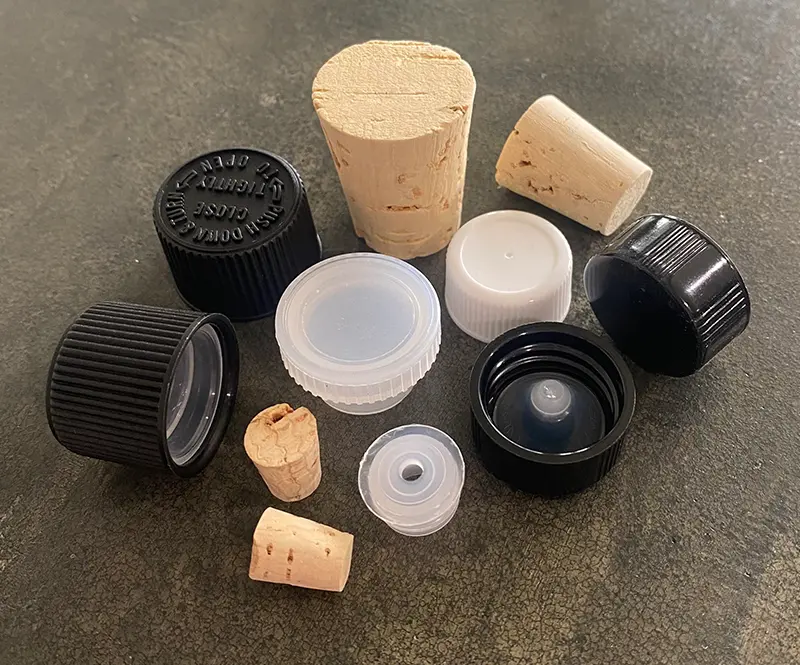
Closure selection deserves particular attention because the bottle opening and dispensing system need to be considered together. Acme offers droppers and other closure types for appropriate vial configurations, including caps and orifice reducers.
How Do Custom Bottles Fit Different Oils?
Different oils can justify different packaging choices because the desired fill volume, dispensing method, visibility, and presentation may vary from one product to another.
For example, a manufacturer packaging small sample quantities may have very different dimensional requirements from a company selling a larger retail format. Acme's stock screw thread vial line includes capacities from 1 ml through larger vial formats, while custom manufacturing can address requirements outside the standard product line.
Manufacturers should define the oil, fill quantity, desired dispensing method, closure requirements, and handling conditions before finalizing a bottle specification. That creates a much stronger starting point than choosing a container primarily by appearance.
Can Custom Bottles Strengthen Branding?
Yes. Custom glass can strengthen branding by giving a manufacturer more control over the proportions, color, dimensions, and decoration of the package.
A bottle is one of the most visible physical components of an essential oil product. When its proportions and decoration are consistent with the rest of the brand, the package can create a more deliberate presentation across retail shelves, shipments, sample kits, and product photography.
Customization can also help avoid forcing a label or design system onto a bottle that was originally created for a different application. That becomes increasingly useful as a brand develops a recognizable packaging system.
When Is Silk Screen Printing Better?
Silk screen printing is a strong option when a manufacturer wants decoration applied directly to the glass rather than relying exclusively on a separate label.
Acme's silk screen process uses a precision-cut stencil to apply ceramic paint to glass, followed by heating in an oven to fuse the decoration to the surface. The resulting decoration is intended to provide a permanent, wear-resistant finish.
That can be attractive for brands seeking clean, integrated graphics on their packaging. Whether screen printing is the right approach should depend on the artwork, bottle design, desired appearance, production quantities, and practical requirements of the finished package.
Can Custom Bottles Unify a Product Line?
Yes. A coordinated custom bottle family can give multiple oils or formulations a more consistent appearance while still allowing individual products to remain distinct.
Manufacturers might maintain common bottle proportions and decoration while differentiating individual products through glass color, printed graphics, closures, or other design elements. That can make a growing collection feel like one intentional product family rather than a group of unrelated packages.
Consistency can also simplify internal packaging decisions. Once a manufacturer establishes a successful bottle format, future products can often be evaluated against that standard rather than beginning the packaging selection process from zero.
Can Higher Volumes Lower Custom Costs?
Yes. Higher quantities can make custom manufacturing more economical because pricing can improve as order volume increases.
Acme Vial & Glass uses tiered pricing based on quantity, and at sufficiently high volumes the cost of custom manufacturing can approach the cost of purchasing a stock part. That does not mean every custom project will automatically be less expensive at volume, but it does mean order quantity should be part of the evaluation.
Manufacturers should compare the complete value of the package rather than focusing exclusively on the unit price of the bottle. A custom design that solves recurring production or branding problems may justify itself differently from a stock container purchased strictly on initial cost.
How Do You Check Manufacturing Consistency?
Manufacturing consistency should be evaluated through control of the forming process, dimensional inspection, and attention to repeatable quality.
In tubular vial manufacturing, glass tubing is heated, formed into the body and opening, closed at the bottom, annealed to relieve internal stresses, and inspected before packaging. Control at each stage helps manufacturers maintain the dimensions and appearance expected from the finished container.
At Acme Vial & Glass, finished vials are inspected for cosmetic defects, dimensional accuracy, and consistency. That matters for essential oil manufacturers because repeatable packaging helps reduce surprises when bottles move into filling, closure application, labeling, packing, and distribution.
Why Choose an Experienced U.S. Manufacturer?
An experienced U.S. manufacturer can bring practical glass-forming knowledge to packaging decisions that go well beyond choosing a bottle from a catalog.
Acme Vial and Glass Co, Inc. was founded in 1942 and remains family-owned and operated three generations later. From its facility in Paso Robles, California, Acme manufactures tubular glass vials in the United States for customers across industries including essential oils, aromatherapy, cosmetics, laboratories, research, and homeopathy.
That history matters because custom packaging decisions often involve several interconnected variables. Dimensions, glass selection, finish, filling, closures, decoration, and order quantity all need to work together.
For manufacturers comparing stock and custom essential oil packaging, the objective should be simple: choose the least complicated package that consistently performs the way your operation and your customers need it to perform.
Conclusion
Custom glass packaging is most valuable when it solves a practical problem. Better dimensions can improve filling, thoughtful dispensing can improve use, coordinated decoration can strengthen branding, and consistent bottle specifications can make an expanding product line easier to manage.
Stock bottles remain an excellent solution when an existing format already meets those needs. When it does not, custom tubular glass gives essential oil manufacturers another path without requiring them to compromise indefinitely around an off-the-shelf container.
With more than 80 years of glass manufacturing experience, U.S.-based production, and capabilities spanning stock and custom vial manufacturing, Acme Vial & Glass can help manufacturers evaluate the right approach for their products. If your current package is limiting filling efficiency, presentation, or product-line consistency, explore Acme's custom essential oil bottles and packaging options to find a better fit.
About the Author
Corey Knowles is the General Manager of Acme Vial & Glass, a manufacturer with over 80 years of experience producing high-quality glass vials and closures for industries ranging from cosmetics to scientific research. She focuses on practical applications of glass packaging and how design choices impact performance in real-world use.